Finding the right WordPress developer in Dubai is not as straightforward as scanning a freelance platform and picking the highest-rated profile. The market is crowded, the skill sets vary wildly, and the difference between a developer who builds a website and one who builds a business asset can determine whether your investment pays off or quietly drains resources for years.
WordPress powers over 40% of the web, and demand for qualified developers continues to climb across every major hiring platform. But strong market demand also means more noise, more mediocre options, and more room for costly mistakes if you do not know what to look for.
This post cuts through that noise. You will learn what a WordPress developer actually does in 2026, how to compare your hiring options in Dubai, what separates a true development partner from a contractor, and which technical and strategic capabilities actually move the needle. From modern tool stacks and AI integration to Dubai-specific hiring considerations, every section is designed to give you a clearer, more confident path to the right hire.
What a WordPress Developer Actually Does in 2026
A modern WordPress developer does far more than install a theme and hand over a login. The core scope spans custom coding, theme customisation, plugin integration, performance optimisation, and ongoing maintenance, but in 2026 that technical foundation sits beneath a much larger strategic responsibility.
The Elementor Shift
The most significant workflow change in professional WordPress development is the dominance of drag-and-drop page builders. In Dubai’s market specifically, Elementor has replaced much of the traditional template coding that once defined the discipline. This is not a shortcut; it is a professional standard. Builders like Elementor deliver faster build cycles, consistent responsive layouts, and cleaner client handoffs without compromising design quality. Developers who still position custom-coded templates as the premium option are, in most cases, solving a problem that no longer exists.
Discovery Before Development
What separates capable developers from exceptional ones is what happens before the first page is built. Top practitioners now run a structured pre-development phase covering strategic discovery, brand audits, competitor analysis, and information architecture mapping. This phase defines the site’s purpose, audience, and conversion logic before any visual decisions are made. Understanding the project scope at this level is what allows a developer to build something that performs commercially, not just technically.
Task Executor vs. Strategic Partner
There is a clear and consequential difference between a developer who executes a brief and one who interrogates it. The task executor builds what is requested. The strategic partner asks why it is needed, who it serves, and what a successful outcome looks like measured in leads, rankings, or revenue. Business goals, brand positioning, and conversion architecture should inform every structural decision, from navigation logic to page hierarchy, not be added as an afterthought after the build is complete.
Why Scope Clarity Protects Your Budget
Undefined scope is the primary driver of cost overruns in WordPress projects. When a developer begins work without a documented understanding of goals, integrations, content requirements, and success metrics, deliverables drift and budgets stretch. A thorough discovery phase locks in expectations on both sides, giving you a clear build plan and giving the developer the context needed to make decisions that serve the business rather than simply complete tasks.
In 2026, the standard has shifted. A WordPress developer who skips discovery, defaults to templates, and avoids strategic conversation is not offering a simpler service. They are offering a riskier one.
WordPress Developer Options in Dubai: Platforms, Freelancers, and Specialists Compared
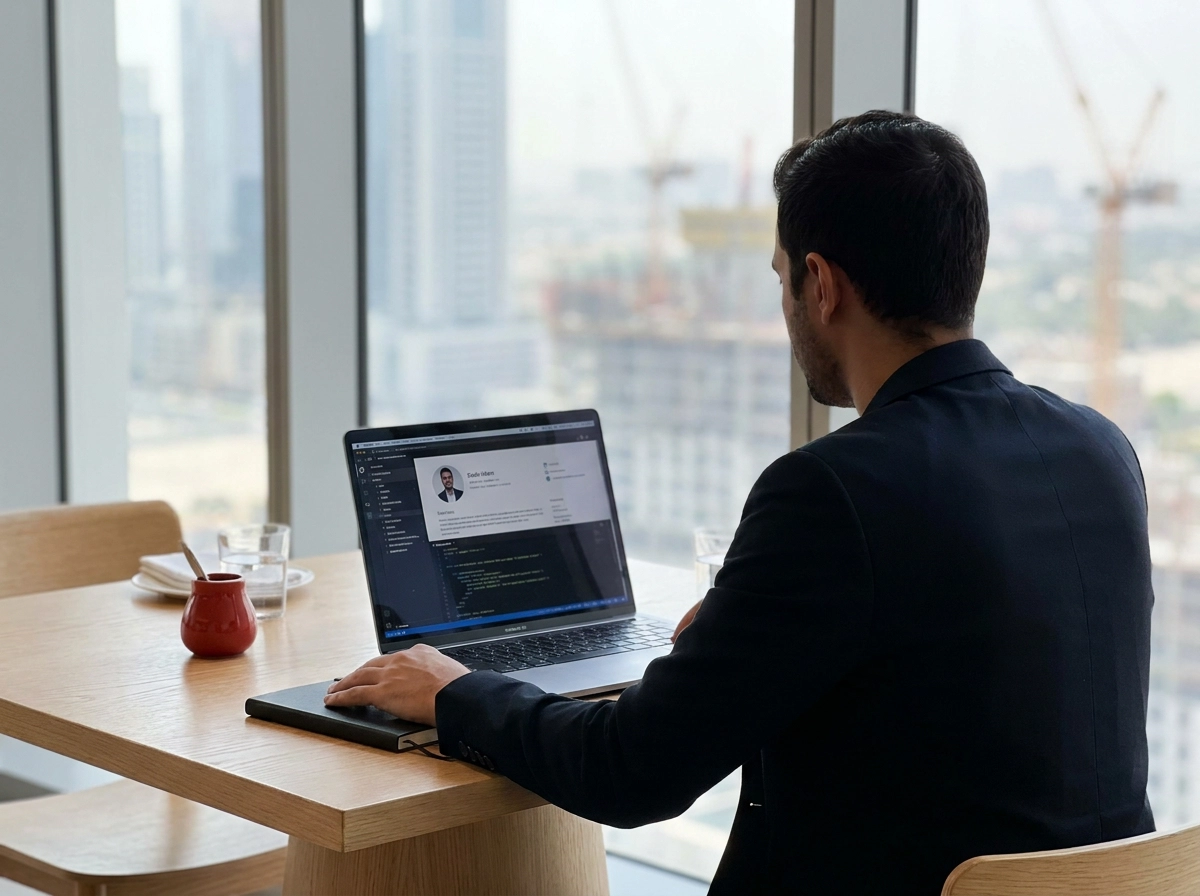
Knowing what a WordPress developer does is step one. Knowing where to find the right one for your business in Dubai is where the decision gets genuinely consequential.
Four main hiring routes exist, and each serves a different type of buyer.
Global vetting platforms (Toptal) compete on rigour. Toptal positions its roster as the top 3% of freelance talent, with client ratings averaging 4.9/5.0 across 3,154 reviews. That vetting credibility is the product. You are paying for a pre-screened developer, not conducting the screening yourself. The trade-off is cost and process overhead: onboarding takes longer and rate floors reflect the premium tier.
Certified expert networks (Codeable) operate with a different quality signal. Codeable guarantees its certified developers a minimum of USD 80 to 120 per hour, a rate floor that volume platforms structurally cannot offer. That floor is a trust mechanism; it filters out low-commitment contributors and keeps the talent pool anchored to professional standards.
Volume marketplaces (Freelancer) offer something the above two cannot: scale and price transparency. Freelancer lists over 1,500 WordPress developer positions for Dubai alone, giving buyers a wide field to work from. The catch is that vetting responsibility transfers entirely to you. Without a structured evaluation process, volume becomes noise.
Local specialists and boutique providers compete on what global platforms cannot replicate: Dubai market knowledge, face-to-face availability, regional UX expectations, Arabic and English bilingual capability, and integrated service bundles that combine development with design, SEO, and marketing. If your project requires someone who understands the local business environment rather than simply the technical brief, this route has structural advantages the platforms cannot match. It is also worth noting that the same integrated thinking applies when you are evaluating support beyond development; for instance, knowing what to look for in an SEO specialist in Dubai follows parallel logic to hiring a developer well.
Comparison at a Glance
| Toptal | Codeable | Freelancer | Local Specialist | |
|---|---|---|---|---|
| Rate Range | USD 150+ /hr | USD 80-120 /hr | USD 15-80 /hr | Varies; project-based common |
| Vetting | Platform-managed, rigorous | Platform-certified | Buyer-managed | Portfolio and referral-based |
| Best Fit | Complex, high-budget builds | WordPress-specific projects | Simple builds, tight budgets | Brand-critical, integrated projects |
| Turnaround | Slower start, reliable delivery | Moderate | Fast to start, variable quality | Aligned to client timeline |
| Post-launch Support | Limited; developer-dependent | Plugin and theme focused | Typically none | Ongoing retainers available |
The right route depends on what you are actually buying. If you need a vetted developer quickly and budget is secondary, global platforms serve that need. If your project requires regional fluency, integrated services, and a provider accountable beyond launch day, a local specialist is the more complete fit.
What Separates a WordPress Developer from a WordPress Partner
Choosing between platforms comes down to more than vetting standards and hourly rates. The deeper question is whether you need someone to build a website, or someone to build what your business actually requires: a digital foundation that generates leads, supports brand growth, and produces measurable outcomes.
A developer delivers a functioning site. A partner delivers a performing one.
The distinction is not cosmetic. A developer working in isolation produces code and pages. A partner integrates WordPress development with graphic design, SEO structure, and digital marketing strategy into a single, coherent build. Each discipline amplifies the others. Strong visual identity increases trust signals, which improves conversion rates. SEO architecture built into the site from day one generates organic traffic that compounds over time. Digital marketing strategy shapes the information architecture before a single page is designed. Separated, these services produce incremental gains. Combined, they produce compounding results that no isolated engagement can replicate.
The Discovery Process That Changes Everything
Top-tier providers do not open a WordPress dashboard on day one. They begin with a structured discovery phase: a brand audit to assess existing visual equity, competitor analysis to identify positioning gaps, information architecture mapping to define how content will guide visitors toward conversion, and content strategy planning to ensure every page has a purpose. This phase is where most projects are either set up to succeed or quietly set up to underperform.
Kiampi Daniel’s process follows this exact sequence: discover the goal, develop the strategy, create the right solution, optimise for performance, and keep improving for growth. You can see how this plays out in practice by reviewing the full project scope for a technical services website in Dubai, where strategy preceded every design and development decision.
Why Sequence Determines Outcome
Sites built with conversion architecture and SEO structure integrated from the outset consistently outperform sites where these elements are applied after launch. Retrofitting SEO onto a poorly structured site requires rebuilding URL hierarchies, rewriting metadata, restructuring internal linking, and often redesigning page templates. Retrofitting conversion architecture means reworking layouts and calls to action that were never designed with user journey in mind.
Both corrections are expensive and deliver diminished returns compared to getting the structure right before the first page goes live.
The difference between a developer and a partner is not skill level. It is scope of thinking. A developer answers: “What should this site look like?” A partner answers: “What should this site achieve, and how do we build it to deliver that from launch day forward?”
That question, asked before any design work begins, is what separates a website from a business asset.
The Modern WordPress Technology Stack: Elementor, SEO, and AI Integration
That strategy before development philosophy demands the right tools to execute it. The technology choices a WordPress developer makes during the build determine whether a site performs commercially for years or requires expensive rework within months.
Elementor as the Professional Build Standard
Elementor has become the dominant page builder among professional WordPress developers in Dubai, and the reasons are practical. It enables faster production timelines without sacrificing pixel-level design control, produces responsive layouts that hold across devices without manual breakpoint adjustments, and generates clean handoff environments where clients can manage content without breaking the design system. For Dubai businesses operating across Arabic and English audiences, Elementor’s native RTL (right-to-left) support and multilingual compatibility remove technical barriers that previously required custom development hours to resolve.
SEO Architecture Built In, Not Bolted On
Sites built with SEO structure embedded from day one consistently outperform those where optimisation is applied after launch. The difference is structural: correct URL hierarchies, schema markup, internal linking architecture, and page speed configuration are significantly harder to retrofit cleanly into an existing build than they are to build correctly from the start. Core Web Vitals scores, which directly influence Google search rankings, depend heavily on how images, scripts, and layout elements are handled at the development stage. Post-launch patching rarely recovers what a clean build would have achieved. Treating SEO and digital marketing as an integrated system from project kickoff, rather than a separate engagement, produces measurably better search outcomes.
Dubai-Specific Technical Requirements
UAE audiences present specific technical demands. Mobile-first design is non-negotiable; the UAE consistently ranks among the highest globally for mobile internet usage. Bilingual site architecture requires more than translated content: it means separate hreflang tags, correctly structured multilingual sitemaps, and RTL layout rendering that does not degrade the visual design. Hosting and CDN selection also matters regionally; servers located in or close to the UAE reduce latency for local users and can positively affect local search rankings.
AI-Assisted Workflows
Leading Dubai developers now incorporate AI tools across the build process. AI-supported content structuring accelerates information architecture decisions. Automated image compression and format conversion (WebP, AVIF) reduce page weight without manual processing. Performance monitoring tools with AI-driven diagnostics flag regressions before they affect rankings or user experience. These workflows reduce delivery time without reducing quality standards.
The Commercial Outcome
A WordPress site built on this integrated stack, combining Elementor’s design precision, embedded SEO architecture, UAE-specific technical configuration, and AI-assisted optimisation, does not just function technically. It loads fast, ranks, converts, and serves as a scalable commercial asset from the day it launches.
What Good WordPress Development Actually Delivers: Results That Matter
A well-built WordPress site is not the deliverable. The results it produces are.
That distinction matters enormously for Dubai businesses evaluating a WordPress developer. The right question is never “did we launch a website?” It is “what changed in the business after we did?”
The metrics worth tracking after a WordPress launch
Once a site is live, five indicators tell you whether the build was actually effective. Core Web Vitals scores, tracked directly in Google Search Console, show whether your pages are technically fit to rank. Organic search position changes confirm whether SEO architecture is working. Bounce rate and time on site reveal whether the experience is holding visitor attention. Conversion rate by traffic source is the sharpest signal: it isolates which channels are delivering qualified prospects versus empty clicks.
53% of mobile users abandon a site that takes longer than three seconds to load, and every additional second costs roughly 7% in conversions. In a market as mobile-dominant as the UAE, those numbers translate directly to lost revenue.
What a results-focused engagement looks like in practice
Consider a Dubai-based B2B services firm with reasonable brand recognition offline but near-zero organic visibility. The site existed, but it ranked for nothing, converted no one, and loaded slowly on mobile. The integrated solution applied three things in sequence: a structural WordPress rebuild with SEO architecture baked into the information hierarchy, a design system aligned to the brand’s positioning in the Dubai market, and a conversion architecture that guided visitors toward enquiry rather than passive browsing.
The measurable arc: organic impressions climbed within the first indexing cycle, Core Web Vitals moved from Poor to Good across key landing pages, and the enquiry rate from organic traffic increased meaningfully. The site began doing commercial work, not just existing.
Why most WordPress projects never reach this outcome
The failure pattern is consistent. SEO structure is absent from the build, so there is nothing for search engines to reward. Conversion architecture is never planned, so visitors arrive and leave without acting. Mobile performance is treated as secondary, penalising rankings and user experience simultaneously. And post-launch, nothing is monitored or improved.
The result is a site that looks credible but performs like a digital brochure with no distribution.
Post-launch optimization is not optional
Ongoing improvement, covering Core Web Vitals monitoring, content updates, conversion testing, and performance audits, is what separates a site that grows from one that stagnates. This is structurally similar to why social media marketing services small businesses actually need are those tied to measurable outcomes, not just consistent activity. Results require systems, not one-off executions.
A results-driven WordPress engagement budgets for post-launch work from the start. Everything else is just a launch.
Dubai-Specific Considerations When Hiring a WordPress Developer
Those results sit at the website level. Getting there, however, requires a developer who understands the market you are actually building for.
UAE Business and Regulatory Context
Dubai businesses operate under distinct jurisdictions. A free zone entity, a mainland company, and a DIFC-registered business each carry different operational requirements that can affect website disclaimers, terms of service, licensing disclosures, and e-commerce checkout compliance. The UAE Central Bank’s September 2025 Banking Law extended regulatory oversight to technology service providers supporting financial services, which directly affects fintech, payments, and investment-related WordPress builds. A developer unfamiliar with the DFSA regulatory framework or local consumer protection norms can expose your business to compliance risk through an otherwise functional website.
Bilingual Website Requirements
Arabic is not optional for most Dubai businesses targeting local consumers. WordPress handles bilingual content through dedicated multilingual plugins, but Arabic support requires more than translation. Right-to-left theme configuration, mirrored navigation, Arabic-optimised typography, and separate hreflang-tagged URL structures for multilingual SEO are all technical requirements. Without proper RTL implementation, Arabic pages break layouts, reduce readability, and lose search visibility among Arabic-speaking audiences across the UAE and GCC.
Dominant Dubai Use Cases
Certain verticals demand genuine local expertise rather than generic development skills. Luxury brand websites require elevated design restraint and performance standards that generic templates undermine immediately. B2B lead generation sites need conversion architecture calibrated to longer Gulf sales cycles. E-commerce stores targeting UAE and GCC consumers require regional payment gateway integration and currency handling. Hospitality and real estate sites carry high visual expectations and regulatory considerations around property listings and pricing disclosures. Each use case has specific requirements that a developer without Dubai market exposure is unlikely to anticipate.
Regional Design and UX Expectations
Dubai audiences hold websites to a premium standard. Fast mobile performance is non-negotiable given UAE mobile internet penetration levels. Visual presentation must signal credibility immediately, with high-quality imagery, purposeful whitespace, and polished typography. Trust signals carry significant weight: client logos from recognisable regional brands, verifiable Google reviews, certifications, and industry affiliations all reduce friction in the decision-making process. A developer who applies a generic international UX template to a Dubai-facing site typically misses these expectations entirely.
The Local Specialist Advantage
A Dubai-based WordPress developer brings time zone alignment, face-to-face strategy availability, and first-hand familiarity with the local competitive landscape. These are practical advantages a remote platform developer cannot replicate. Market context, regional design sensibility, and an understanding of how Dubai businesses attract and convert customers inform every build decision. For businesses pairing their WordPress project with broader digital marketing strategy, that shared local knowledge compounds meaningfully across every channel.
How to Evaluate a WordPress Developer Before You Hire
Knowing that Dubai presents distinct hiring considerations, the next step is applying a structured evaluation process before you commit to any provider.
Portfolio signals that matter
Look beyond screenshots. Request live URLs and verify performance independently using tools like Google PageSpeed Insights. A strong portfolio demonstrates industry diversity, evidence that SEO and visual design are integrated within the same build, and documented outcomes: improved rankings, faster load times, or measurable conversion gains. Visual aesthetics alone indicate execution skill; measurable results indicate strategic thinking.
Questions to ask every candidate
Four questions separate strategic partners from task executors:
- What is your discovery process before development begins?
- How do you handle SEO site architecture during the build, not after?
- What does post-launch support include, and for how long?
- Can you share performance metrics from previous projects?
A developer who cannot answer these clearly has likely never been asked them, which tells you something important. The same due diligence applies when evaluating any digital service provider; the framework outlined in this practical guide to evaluating SEO providers in Dubai applies equally well to assessing WordPress developers on process rigour.
Red flags to identify early
Walk away if a developer proposes a fixed template before understanding your business. Other warning signs: no discovery phase, inability to discuss conversion architecture, and silence on post-launch planning. These behaviours indicate a transactional mindset where your site is a deliverable to close, not a business asset to build.
What a strong proposal must include
A credible proposal contains a business brief confirming the developer understood your goals, a phased project plan with defined milestones, technology recommendations explained with rationale rather than jargon, deliverables linked explicitly to measurable outcomes, and a post-launch optimisation roadmap. A proposal missing any of these is incomplete, regardless of how competitive the price appears.
Evaluating rate against genuine value
Comparing hourly rates in isolation is the most common evaluation mistake Dubai businesses make. A lower rate without a discovery phase, SEO integration, or post-launch support routinely costs more in remediation than a higher-rate provider who includes these by default. Assess scope coverage, process depth, integrated capability across design and SEO, and the commitment to performance after launch. That comparison reveals true value far more accurately than cost per hour.
The Right WordPress Developer Changes More Than Your Website
Once you have done the evaluation work described above, one conclusion becomes difficult to avoid: the most valuable WordPress engagements in Dubai are not primarily technical exercises. They are strategic ones. A site built with design, development, SEO, and marketing integrated from the start performs differently, and measurably so, compared to a site assembled in isolated stages.
The research is unambiguous on timing. A one-second delay in page load reduces conversions by an average of 7%. Core Web Vitals directly influence Google search rankings. Conversion architecture that is retrofitted after launch consistently underperforms architecture that was planned before a single page was built. The window to get this right is the discovery and planning phase, not the post-launch review.
That is the philosophy behind how I work. As a Dubai-based graphic designer, WordPress developer, SEO specialist, and digital marketer, I bring these disciplines into a single coherent process rather than treating them as sequential handoffs. The process starts with discovery: understanding your business goals, your audience, your competitive position, and your growth targets. Strategy follows. Then design and development, built around SEO structure, conversion architecture, and brand clarity from day one. Then optimisation, and continued improvement beyond launch.
This integrated approach is what I have built for businesses across Dubai and the UAE, combining visual identity, WordPress development, search visibility, and digital marketing into work that is designed to perform commercially, not just look professional.
If you are evaluating a WordPress build or a site rebuild, the smartest starting point is a discovery conversation before you commit to a scope, a budget, or a provider. No obligation, no pitch. Just a focused discussion about your goals, your current gaps, and what a build that truly serves your business should include.
Get in touch to start that conversation.
Conclusion

Hiring a WordPress developer in Dubai is not simply a technical decision. It is a business decision that shapes how your brand is perceived, how your site performs in search, and how effectively it converts visitors into customers.
The key takeaways are clear: look beyond code to strategy; prioritise developers who understand SEO, design, and business goals from the outset; choose someone who treats your site as a commercial asset, not a finished product; and recognise that Dubai’s market demands local insight alongside technical skill.
The right developer does not just build a website. They build a foundation for growth.
If your current site is underperforming, or you are planning a new build, the best investment you can make right now is a focused conversation about what you actually need. Get in touch and let’s start there.