

Imagine leaving your home country with a dream in your heart, landing in one of the most competitive cities in the world, and spending your first two years lifting boxes in a warehouse. That was me. Kiampi Daniel, a Cameroonian kid who never finished his first semester of university, trying to figure out how to turn a passion for design into an actual career.
This is not a story about overnight success. It is a story about showing up, learning quietly, and building something real from almost nothing. From my first days on the warehouse floor at GIFTCO International LLC, to managing the full digital marketing strategy for a logistics company and generating over 2,000 leads in just 20 months, every step taught me something valuable.
In this post, I am going to walk you through my entire journey. We will cover where it all started, how I trained myself while working full time, the mistakes I made, and the breakthroughs that changed everything. If you are just starting out and feeling lost, I hope my story reminds you that the path is rarely straight. But it is always worth it.
The Warehouse Floor, Day One
Dubai in 2022 was not the dream destination you see on Instagram. The pandemic was still leaving its mark on the city, businesses were cautious, and finding work as a newly arrived Cameroonian with no local experience was harder than it looked from the outside. I had been in Dubai for one month. The savings were thinning. I needed a job.
So I took one at GIFTCO International LLC as a Warehouse Assistant.
I want to be honest with you about how that felt. I had left Cameroon with a creative dream in my chest. I had started studying Graphics Design at IUGET University. Design was the plan. And here I was, moving stock in a warehouse. That gap between where I thought I was headed and where I actually stood was real, and it stung a little.
But here is the thing nobody tells you at the start of a career transition: the job you take does not have to match the career you are building. It just has to keep the lights on while you build it.
On that warehouse floor, I made myself a quiet promise. This role is temporary. Every hour outside of it belongs to the dream. I was not going to drift through the days feeling sorry for myself. I was going to show up, do the work properly, and use the stability this job gave me as fuel.
That decision, to give full effort to work that did not excite me, turned out to be the first real career lesson. Discipline does not start when the work gets interesting. It starts exactly here, on a floor like this, when nobody is watching.
Where It All Started: Cameroon to Dubai
Before that warehouse floor, there was a classroom in Douala.
I grew up in Cameroon, and after secondary school I earned my GCE A Level in Arts at Malangue Bilingual College, Douala. That arts stream was where I first learned to think visually, to pay attention to form, colour, and how things are arranged on a page. I did not know it then, but that foundation was doing quiet work.
When it was time for university, Graphics Design felt like the obvious next step. I enrolled at IUGET University Institute in Cameroon. It felt right. Creative, practical, future-facing. The kind of path that made sense for someone who had always responded more to visuals than to text.
Then I left. Not even a full semester in.
The decision to travel to Dubai and pursue something bigger was not made lightly. I was walking away from a structured academic path with no guarantee of what was on the other side. It cost me the comfort of a plan. What it opened up was everything else.
Here is what I want anyone reading this to hold onto, especially if your starting point looks unconventional: an incomplete semester and a credential that most people outside Cameroon have never heard of did not stop the journey. The arts education I received shaped how I see and create. That foundation did not disappear when I left. It came with me, through the warehouse, through every training course, and into every design I have made since.
Starting from behind is still starting.
Two Years in the Warehouse, One Goal in Mind
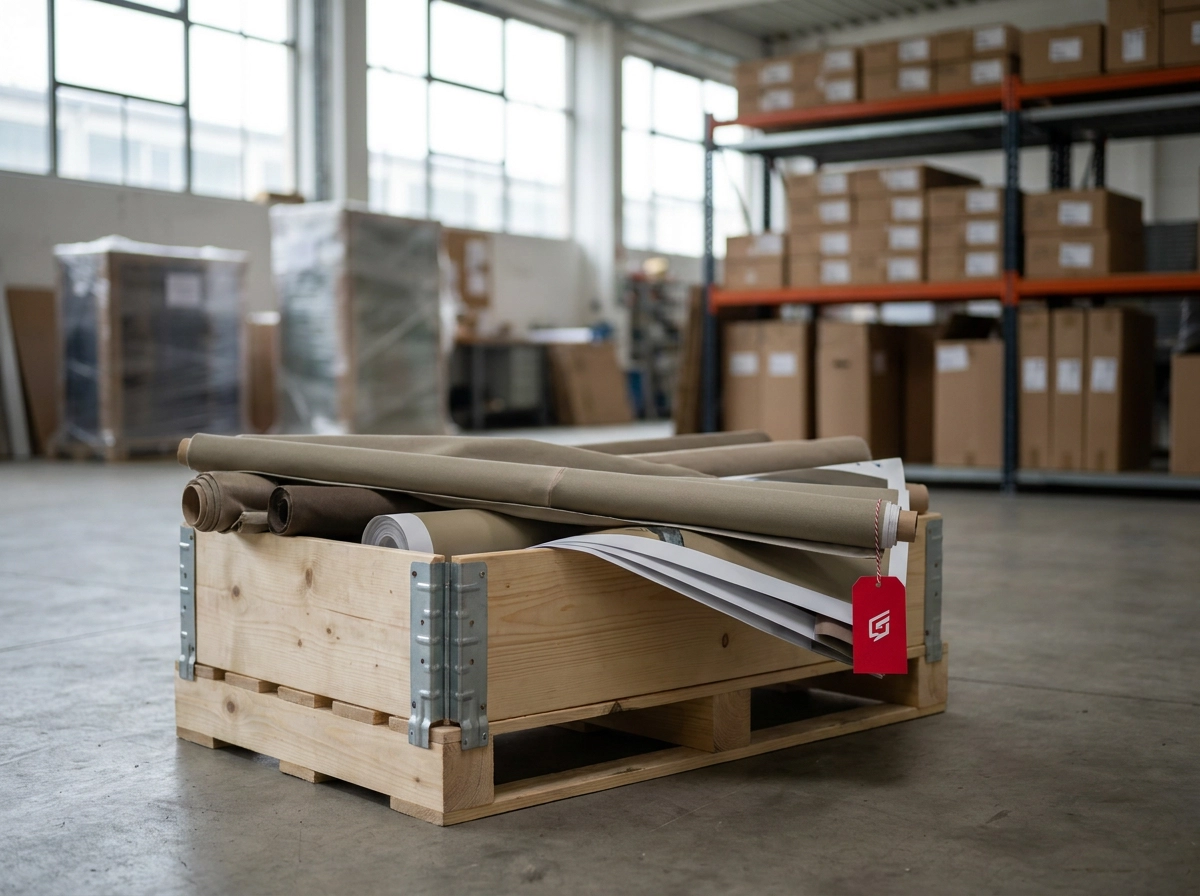
Every single day at GIFTCO, I moved through a warehouse full of exhibition materials. Banners, display stands, branded fixtures headed out to events across Dubai. And every now and then, I would walk past something the design team had created and just stop.
The work was genuinely beautiful. Bold, precise, professional. I was carrying it, wrapping it, loading it into trucks while someone else had designed it. That gap between where I was standing and where I wanted to be became fuel.
I decided I was not going to stay in that gap.
About six months in, I enrolled at OSCAR Educational Institute in Dubai for a three-month Graphics Design training programme, while keeping my full-time warehouse job. That was my first formal step toward the career I had left Cameroon to build. Once I finished, I did not stop. I went straight into six months of Advanced Graphics Design training at Learnovate Training Center. For that stretch, I negotiated school leave from GIFTCO and they approved it. I was grateful.
The schedule was demanding. Warehouse shifts, training sessions, and then whatever hours were left over went to practice. Not casual practice either. Deliberate, focused repetition until the skills started to feel real.
What this period taught me is simple: your job title does not have to be your ceiling. I did not wait to leave GIFTCO before I started becoming a designer. I built the career from inside the warehouse, layer by layer.
If you are working through a similar transition and thinking about how to build work that actually reflects your skills, this piece on transitioning from student to professional graphic design portfolio covers exactly what that shift looks like in practice.
The Portfolio Nobody Would Have Hired From
The training certificates were done. The portfolio was built. And honestly? It was not good enough.
Looking back at that first collection of work, I can say that clearly now. The designs were technically there, but they lacked the confidence and polish that make a client stop scrolling. Recognising that, without making excuses, was the turning point. It forced me to stop treating design as something I was learning and start treating it as something I had to become.
So I went underground with it. Hundreds of YouTube tutorials, late nights re-doing projects nobody asked for, treating every personal concept like a real client brief with real standards. That self-imposed pressure built discipline faster than any classroom had.
The book that genuinely shifted my thinking was Graphic Design for Everyone by Cath Caldwell. It gave structure to instincts I already had but could not explain. Suddenly I understood why a layout worked, not just that it did. That kind of understanding changes the quality of your decisions at a fundamental level. You can see more of my design thinking applied in practice as the work developed from here.
Proximity also played a quiet but powerful role. The GIFTCO design team was in the same building every day. Watching their exhibition stand work up close gave me an informal but real professional standard to measure myself against. That visibility was mentorship without a formal title attached to it. A real-world example of how that creative thinking translated into actual brand work came later, but the seeds were planted here.
The shift from “I am learning design” to “I am a designer” is not just motivational language. It changes how you show up, what you accept from your own work, and how seriously you invest in getting better.
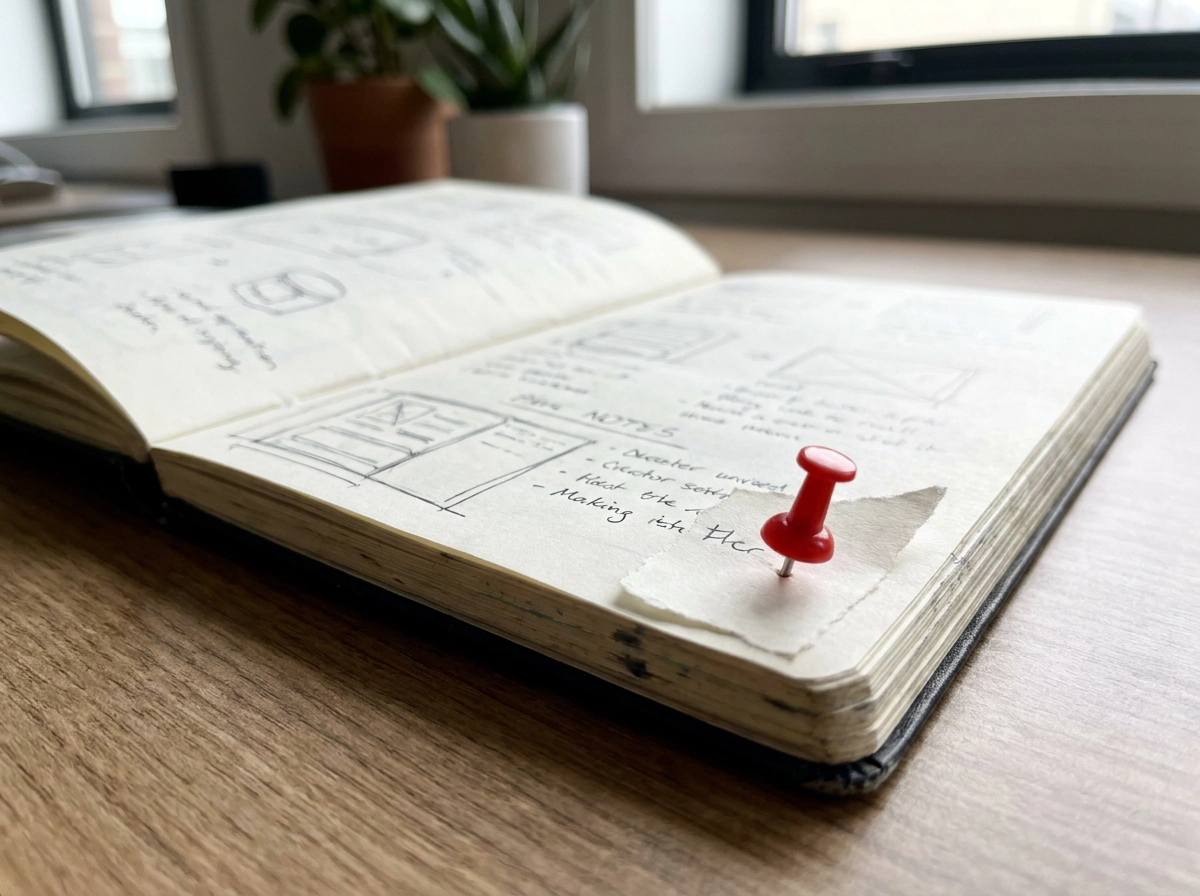
GULFWAY: One Year That Changed Everything
That mindset shift, from learning design to being a designer, is exactly what got me the call from GULFWAY Marketing LLC.
Walking into a professional creative agency for the first time felt different. This was not a training institute or a warehouse with a design team down the hall. This was a full operation: videographers, developers, graphic designers, all working on real client briefs every day. I was hired as Junior Graphic Designer, and I was the only African in the room. I will not pretend that did not register. It did. But I chose to let it sharpen my focus rather than shrink me. I showed up, did the work, and let the output speak.
What I did not expect was how fast the environment would stretch me. Creative agencies do not let you stay in one lane. You watch how the videographer frames a shot, how the developer builds a WordPress page, how the SEO specialist structures content. Within that single year, I picked up hands-on exposure to videography, photography, WordPress development, SEO, Google Ads, social media marketing, and professional client ethics. That is not a training brochure; that is what actually happened.
Curiosity pushed me further than my job title allowed. I started assisting on photography and videography shoots, handling cameras, contributing to minor edits. Nobody handed me that. I asked questions and made myself useful beyond my lane.
No single course gave me what that one year gave me. How I stood out in the competitive world of graphic design goes deeper into that, but the short version is this: real environments build real skills. The UAE’s growing recognition of multi-discipline creative sector expertise as a professional standard reflects exactly what agency life teaches you by default.
Chose and Move Cargo: Where the Skills Became Results
GULFWAY showed me what was possible. Chose and Move Cargo is where I proved it.
I joined as Social Media Manager, but within a few months the role had grown into something much bigger. I was handling the company’s full marketing operation: content, ads, brand visuals, and eventually the website. No brief for that expansion existed. The business needed it, I had the skills, and I stepped in.
The website decision was deliberate. A lot of company sites are digital business cards, pretty but passive. I built and managed theirs as a lead generation tool, optimising for search, structuring pages with clear intent, and making sure every visitor had a reason to act. Over 20 months, that website brought in over 2,000 leads for the company. That number sits at the centre of this chapter because it is the clearest proof that the years of training, practice, and watching other professionals work had translated into real business value.
Running an entire company’s marketing strategy alone teaches you things a team environment simply cannot. There is no one else to escalate to. You prioritise or things fall through. You learn what actually moves the needle and stop spending time on what does not.
This chapter is also where everything converged. Design, SEO, WordPress, content, social media, paid ads, and brand thinking were no longer separate skills picked up at different jobs. They were working together, pointed at a single goal, for a single business. That is what full-stack marketing actually feels like in practice.
Where I Stand Now

That Chose and Move Cargo chapter closed with something real: a full marketing operation, owned and delivered by one person, producing measurable results. So where does that leave me today?
Here is the honest answer.
My current skill stack covers Graphic Design and Branding, SEO, Web Design and WordPress, Digital Marketing, and Social Media and Content. These are not separate services I offer on a menu. They are disciplines that grew together, each one reinforcing the others, built across four years of real work rather than a single course.
AI is part of that stack now, and I want to be straightforward about it. I do not treat it as a separate specialty or a badge to add to a job title. Staying current with AI tools in content creation, SEO workflows, and marketing strategy is simply part of being a full-stack marketer in 2026. If you want to stay useful to your clients, you adapt. That mindset connects directly to the technology resources and insights I follow closely.
This blog will be updated. The story is not finished, and I will not pretend it is.
If I trace a line from the arts student who left Cameroon without finishing a semester to the marketer writing this in Dubai in 2026, one thread connects every point: choosing to grow regardless of the conditions. Not waiting for the right job, the right city, or the right credentials.
If you are somewhere in the middle of your own transition, that thread is available to you too. Your starting point does not set your ceiling. For a broader look at how to grow your digital presence from wherever you are right now, that conversation continues.
The Journey Continues
From the warehouse floor in 2022 to full marketing ownership in 2026, this entire arc was built on four things: formal training, self-directed learning, real-world experience, and the refusal to stay where the story started. No shortcuts, no lucky breaks. Just consistent, deliberate progress across four years.
If you are somewhere in the middle of a similar transition, here is the honest takeaway: start where you are. The warehouse, the entry-level role, the unfinished degree, none of that disqualifies you. Invest in your craft consistently, even when the hours are short and the results are slow. Stay curious across disciplines, because the marketer who only does one thing is already falling behind. And let the work speak before the title does. A strong portfolio outlasts any job description.
Everything described in this story is documented in the work itself. If you want to see where the journey has landed, kiampidaniel.com is the living proof. The portfolio, the projects, the results. Not a summary of the story, but the evidence of it.
This blog will be updated. The journey continues.
Conclusion
Four years. One clear direction. Zero shortcuts.
This journey proves that your starting point is not your ending point. The warehouse floor was not a detour; it was the foundation. Formal training gave the framework. Real-world experience gave the proof. Consistent, disciplined effort made the difference.
The takeaways are simple: invest in skills before you need them, let your portfolio speak louder than your title, stay curious across disciplines, and trust the process even when progress feels invisible.
If you are in the middle of your own transition, stop waiting for the perfect conditions. Start where you are, with what you have, and build forward.
Visit kiampidaniel.com to see the work, the results, and the ongoing story. The journey does not stop here. Neither should yours.
