Most businesses think they need a logo. What they actually need is a brand identity, and there is a significant difference between the two.
A brand identity design service covers far more ground than a single mark or color palette. It is a strategic system that shapes how your business is perceived across every touchpoint, from your website to your packaging to the way your social media content feels at a glance. Research confirms why this matters: the human brain processes visual information 60,000 times faster than text, and audiences retain 65% of what they see three days later compared to just 10% of what they read.
If you are investing in professional branding, you deserve to know exactly what you are paying for and what separates a complete service from a superficial one.
This post breaks down everything a quality brand identity design service should include, how it connects to real business outcomes, what the process looks like from discovery to delivery, and what to watch out for when choosing a design partner. Whether you are building a brand from scratch or refining an existing one, this guide gives you the full picture.

Brand Identity Design Is Not Just a Logo
Brand identity is the complete visual and strategic system that represents your business: logo, colour palette, typography, imagery style, and brand voice working together as one coherent whole.
A logo alone cannot carry that weight. When your social media posts, website, business cards, and proposals look visually disconnected, customers register the inconsistency as a lack of professionalism, and trust erodes before a single conversation begins.
Design is also a retention tool, not just a styling choice. That gap means your visual identity is doing more active communication work than any caption or tagline ever will, as confirmed by research on the superiority of graphics over text in long-term memory retention.
This is the difference between cosmetic design and strategic brand identity design. Cosmetic design makes things look appealing. Strategic brand identity design makes a business recognisable, trusted, and chosen by solving a communication problem, not decorating a surface.
When every visual element is intentional and consistent, the brand stops being something a business has and starts being something customers remember, return to, and recommend.
What a Complete Brand Identity Design Service Should Include
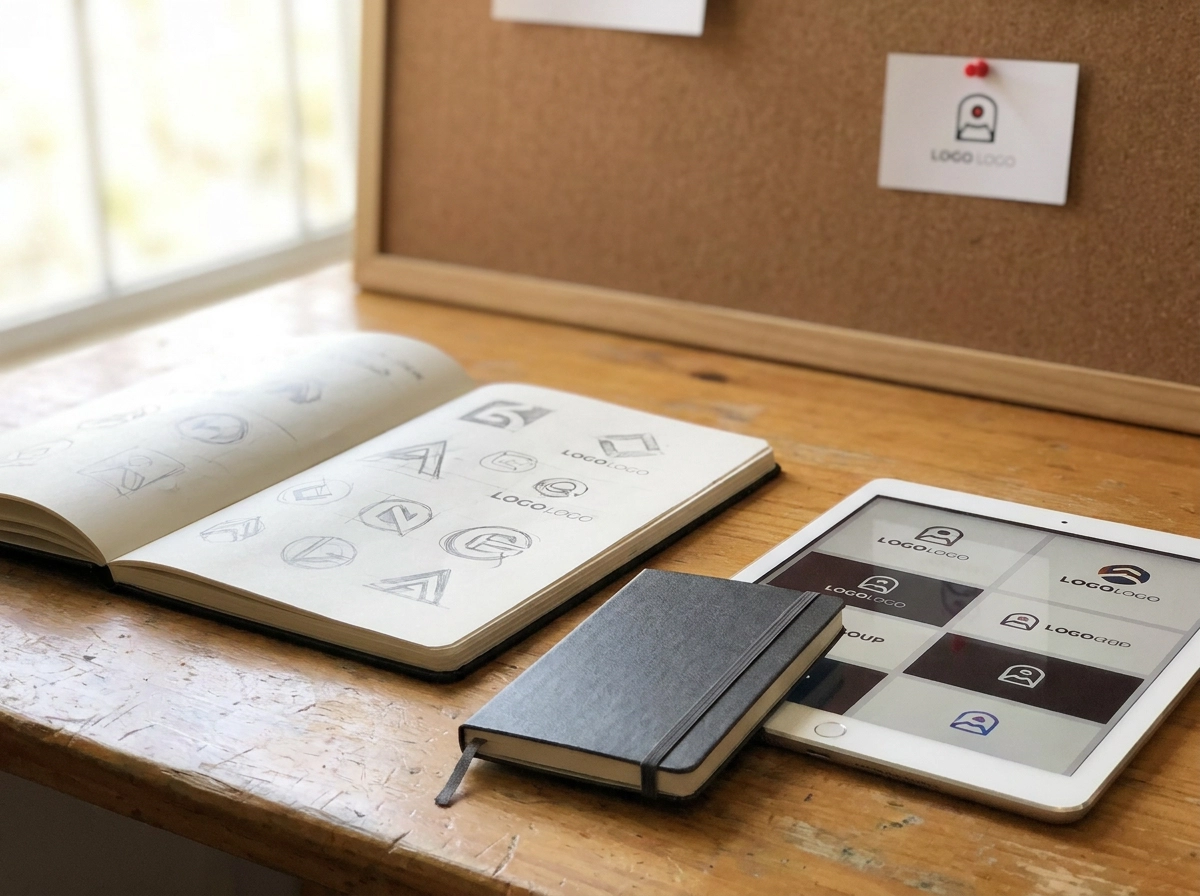
Knowing what brand identity design is matters less than knowing what a complete service should actually deliver. Here is what every serious brand identity package must include.
1. Logo Design System A single logo file is not enough. A complete service delivers the primary logo plus alternate versions: horizontal, stacked, and icon-only. Each variant serves a different context, from website headers to app icons to embroidered uniforms. File formats should cover SVG and EPS for scalable use, PNG for digital, and print-ready PDF or CMYK TIFF for production.
2. Colour Palette with Usage Rules Primary and secondary colours must be defined in HEX (web), RGB (screen), and CMYK (print) to ensure consistent reproduction across every channel. Without usage rules specifying when each colour applies, even a strong palette becomes inconsistent in practice.
3. Typography System Heading and body font pairings should reflect brand personality while remaining readable across platforms, browsers, and devices. A typography system specifies sizes, weights, and hierarchy so that all communications feel like they come from the same brand.
4. Brand Guidelines Document This is the document that makes everything above enforceable. It tells the client, a printer, and a social media manager exactly how to apply every visual element. Without it, brand consistency depends entirely on memory and guesswork.
5. Supporting Design Assets Business cards, letterheads, email signatures, and social media profile templates extend the identity into everyday business use. These are not optional extras; they are where the brand makes its first impression in real-world interactions.
Kiampi Daniel’s Complete Brand Identity service in Dubai covers all five components as one connected system. Each element is designed to work with the others, not assembled from separate, uncoordinated deliverables.
How Brand Identity Design Connects to Business Outcomes
Knowing what a complete brand identity system includes is one thing. Understanding why it drives measurable business results is another.
Your brand identity communicates before a single word is read, and that speed has direct consequences for purchase decisions. The logo, the colours, the visual tone: all of it lands first. That first impression either builds confidence or creates doubt.
Visual consistency directly influences purchase decisions. Buyers are more likely to trust and choose brands that look professional and coherent across every touchpoint, from a business card to a Google Ad to an Instagram post. Inconsistency signals instability, even when the product or service is strong.
There is also a digital performance dimension that logo marketplaces rarely address. A brand identity designed with digital use in mind, using scalable vector files, web-optimised colour systems, and correctly structured assets, performs better across websites, paid advertising, and organic content. The technical foundations of design affect how fast pages load, how consistently visuals render across devices, and how efficiently ad creative scales.
This is why brand identity should be viewed as a foundation investment, not a line-item cost. Every dirham spent on Google Ads, social media content, or SEO builds on the brand beneath it. A weak or inconsistent identity reduces the return on all of it. A strong one multiplies it.
That outcome-focused thinking is what distinguishes a strategic brand identity design service from a cheap logo generator. One produces a file. The other builds the platform everything else grows from.
What the Process Looks Like: From Discovery to Final Delivery
Knowing that brand identity drives business outcomes is one thing. Understanding what a professional service actually does, step by step, is what separates informed buyers from those who end up disappointed.
1. Discovery Before any design work begins, the focus is entirely on understanding your business: your goals, target audience, competitive landscape, and brand personality. This phase shapes every decision that follows. Skipping it is how generic identities are produced.
2. Strategy and Direction With discovery complete, the work shifts to defining visual direction through mood boards and a creative brief. This aligns design decisions with business objectives before a single concept is created, eliminating guesswork and reducing wasted revision cycles.
3. Design and Development Logo concepts and visual system elements are developed with structured feedback rounds built in. Clients review, respond, and guide the direction. This is a collaborative phase, not a reveal-and-hope moment.
4. Refinement and Finalisation Based on client input, the identity is refined until it is precisely right. Final files are then prepared across all required formats: vector, print-ready, and web-optimised versions.
5. Handover and Guidelines Delivery includes the full brand guidelines document and all asset files, the same document discussed in the previous section, ensuring consistent application from day one.
This mirrors the approach detailed in my design process: discover the goal, develop the strategy, create the right solution, optimise for performance, and keep improving for growth. Each phase is deliberate. Nothing is skipped to cut time or cost, because the foundation built here determines how effectively every future marketing investment performs.
Why Dubai Businesses Have Specific Brand Identity Needs
A well-executed process only delivers results when it is built for the right market. Dubai presents a distinct set of requirements that make generic brand identity work fall short.
1. Multicultural audiences demand universally readable identities. Dubai’s population is among the most internationally diverse in the world. A brand identity that leans on culture-specific colour symbolism, imagery, or visual assumptions risks communicating the wrong message to a significant portion of its audience. Effective brand identity design here must work across cultural contexts, communicating clearly without depending on any single cultural frame of reference.
2. The UAE business environment rewards scalable brand systems. Startups launch fast, SMEs expand regionally, and businesses pivot. A brand identity built as a rigid system rather than a flexible, scalable one forces costly redesigns as the business scales. Investing in a structured identity from the outset protects that investment through growth.
3. Dubai’s visual standard is rising. Dubai’s design culture and client expectations have matured rapidly, raising the visual standard for professional brands. A brand that looked polished five years ago may read as dated today.
4. Price does not equal strategy. Brand identity packages in Dubai range from AED 1,050 for startup-level work to AED 2,750 for premium packages. The gap is not just in deliverables; it reflects the presence or absence of discovery, strategy, and execution depth.
5. Regional nuance requires specific expertise. Working with a designer who understands Arabic typography, local aesthetics, and multicultural visual communication makes a measurable difference. You can explore more on this perspective through the Kiampi Daniel blog, where design, strategy, and UAE market context intersect regularly.
The Advantage of an Integrated Brand Identity and Digital Service
Understanding your local market needs is only part of the picture. The other part is ensuring every service connected to your brand works from the same playbook.
Siloed services create hidden costs. A brand identity built without input from your web designer or SEO specialist often needs revisiting once those channels are built. Colour systems may not translate correctly on screen, file formats may be wrong for the web, and the visual language may not align with your digital campaigns. That rework costs time and budget that could have been avoided.
The integrated advantage is consistency. When brand identity, web design, and digital marketing are developed by the same person with a single strategy, every channel reinforces the same message. The visual system that works on your business card also works on your landing page, your Google Ads creative, and your social content, without translation errors between vendors.
Part of my workflow includes AI-assisted tools that accelerate iteration without inflating timelines, which means more refinement cycles within the same engagement rather than fewer.
This is the practical value of working with Kiampi Daniel. With cross-disciplinary expertise across Graphic Design, SEO, Web Design, and Digital Marketing, Dubai businesses gain one accountable partner across brand and growth. If you want to understand how SEO fits into that picture, this guide on what to look for in an SEO specialist in Dubai outlines exactly what results-driven SEO involvement should look like.
What to Look for in a Brand Identity Designer (and Red Flags to Avoid)
Choosing the right designer matters as much as choosing to invest in brand identity at all. Here is what to evaluate before you commit.
1. Ask for the process, not just the portfolio. A credible designer can walk you through their methodology from discovery to delivery. A well-documented design portfolio that shows the full system tells you whether the designer thinks in systems or in single assets.
2. Assess portfolio depth beyond logo samples. Can they show complete brand identity systems, including brand guidelines, applied mockups, and real-world usage across print and digital? A logo in isolation tells you very little.
3. Look for strategic questions, not immediate concepts. A strong designer asks about your business goals, target audience, and competitive landscape before opening any design software. If the first thing they offer is a visual concept, strategy has been skipped.
Red flag: no brand guidelines document delivered, without it, consistent application is impossible.
Red flag: extremely low-cost packages with no discovery phase. Packages priced to skip strategy produce generic output that does not differentiate your business. In a market as visually competitive as Dubai, generic is invisible.
4. Consider future support beyond identity design. A designer who can also support your website, social media, and digital marketing removes coordination overhead as the business scales. Briefing multiple specialists separately introduces inconsistency.
A Strong Brand Identity Is a Business Decision, Not Just a Design One
Brand identity shapes customer trust and long-term equity in ways no single campaign can replicate. Knowing what to look for is the first step. Acting on it is what separates businesses that invest strategically from those that keep rebranding every few years.
Three takeaways to carry forward:
- Ask to see the full process and a complete brand guidelines document, not just a logo portfolio. Any designer can show finished work. A credible one can walk you through the thinking behind it.
- Prioritise designers who tie their work to business outcomes and who can support your brand across digital channels after the initial design phase. A logo handed over without ongoing capability is a starting point, not a solution.
- If your business operates in Dubai or across the UAE, work with someone who understands this market. Multicultural communication, regional aesthetics, and the integration between brand identity, SEO, and design-led digital strategy are not optional extras here. They are competitive requirements.
A strong brand identity does not happen by accident. It is built through a clear process, guided by business goals, and maintained consistently across every channel.
If you are ready to build a brand identity that works as hard as your business does, get in touch with Kiampi Daniel to talk through what you need.
Conclusion
Your brand identity is far more than a logo. Everything covered in this guide points to the same conclusion: a complete, strategically built brand identity is the foundation everything else grows from.
Review what your current brand is actually communicating, and decide whether it reflects the business you are building. If the answer is no, now is the right time to change that.